
Last updated November 21, 2026
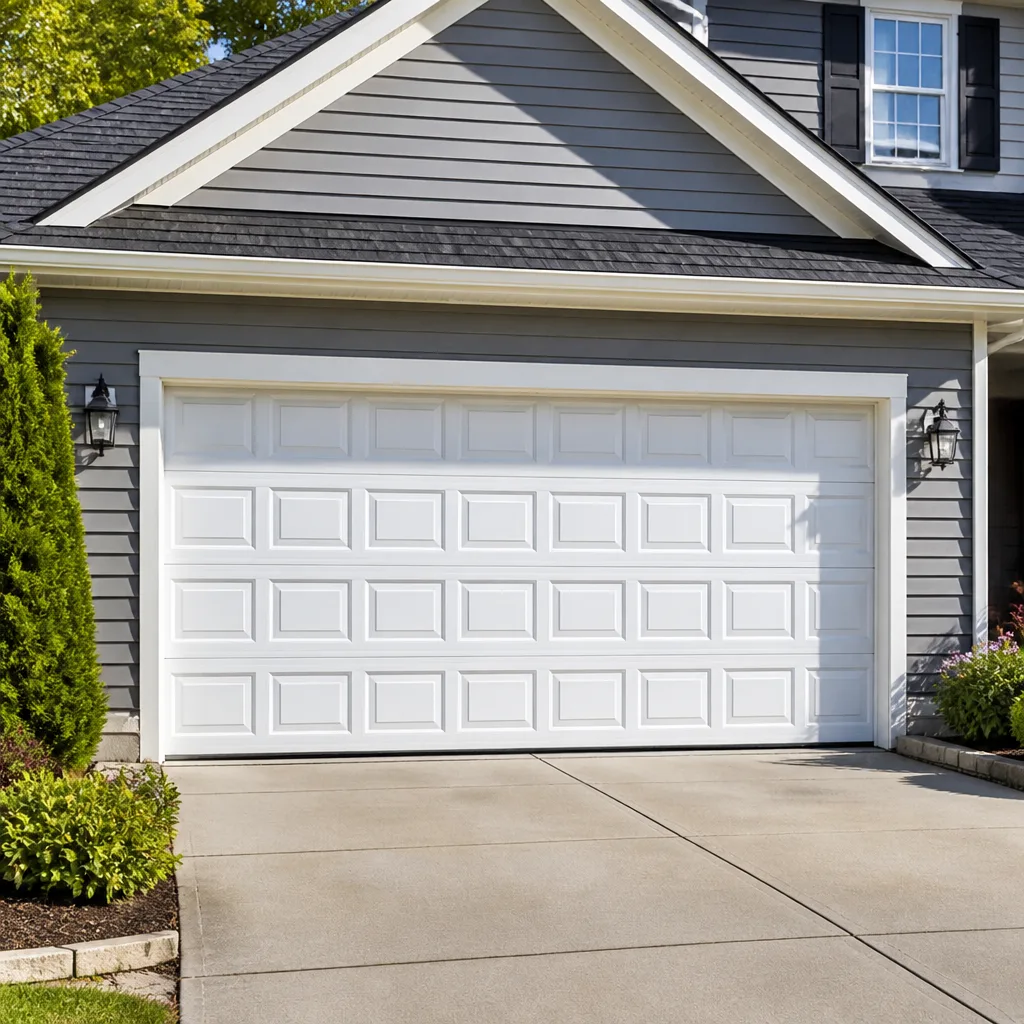 Raised-panel steel
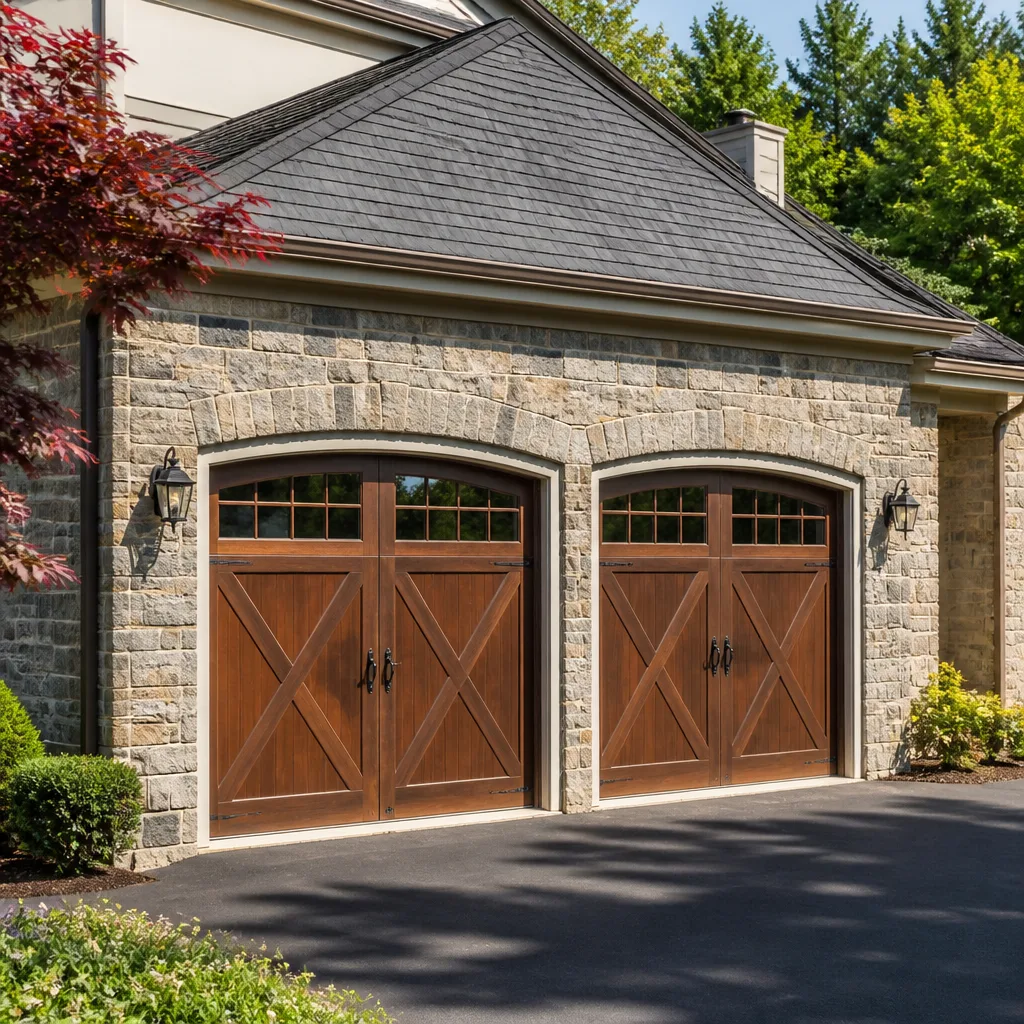 Carriage house
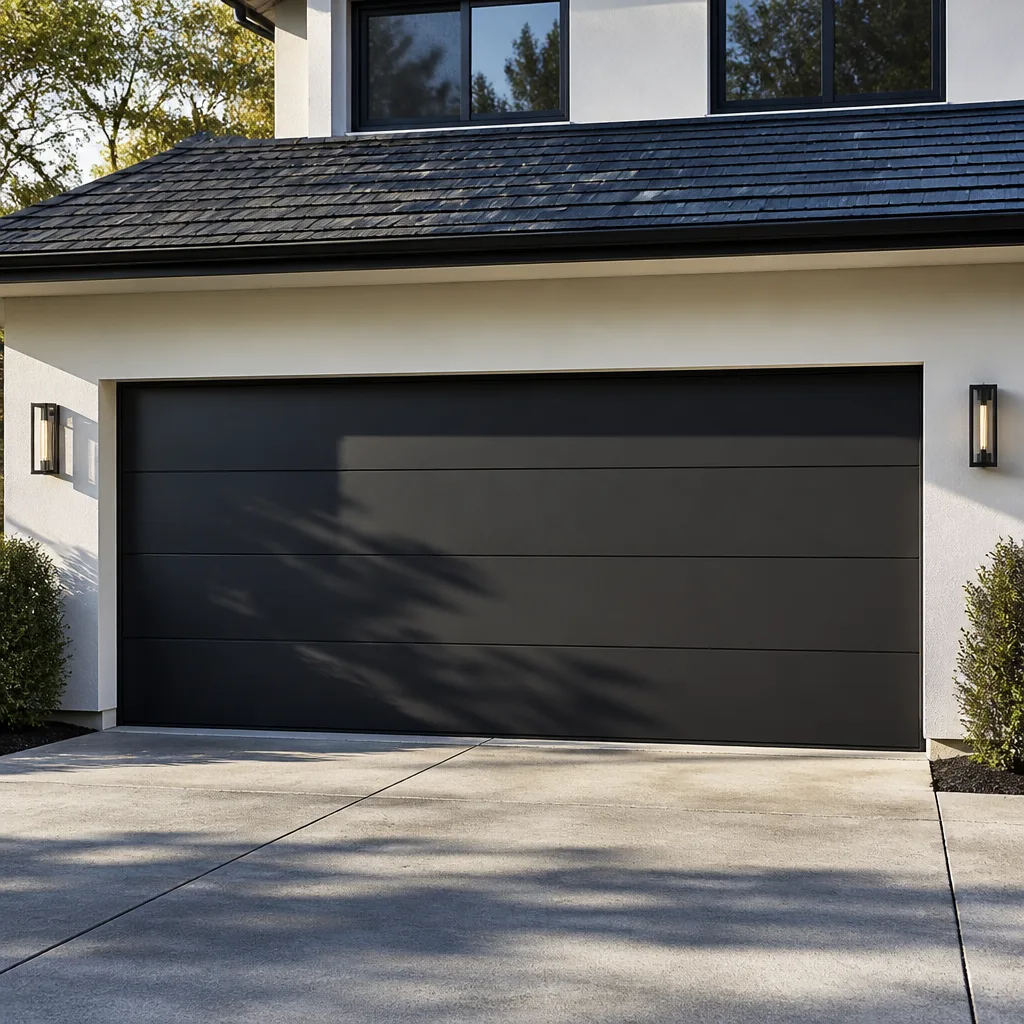 Modern flush
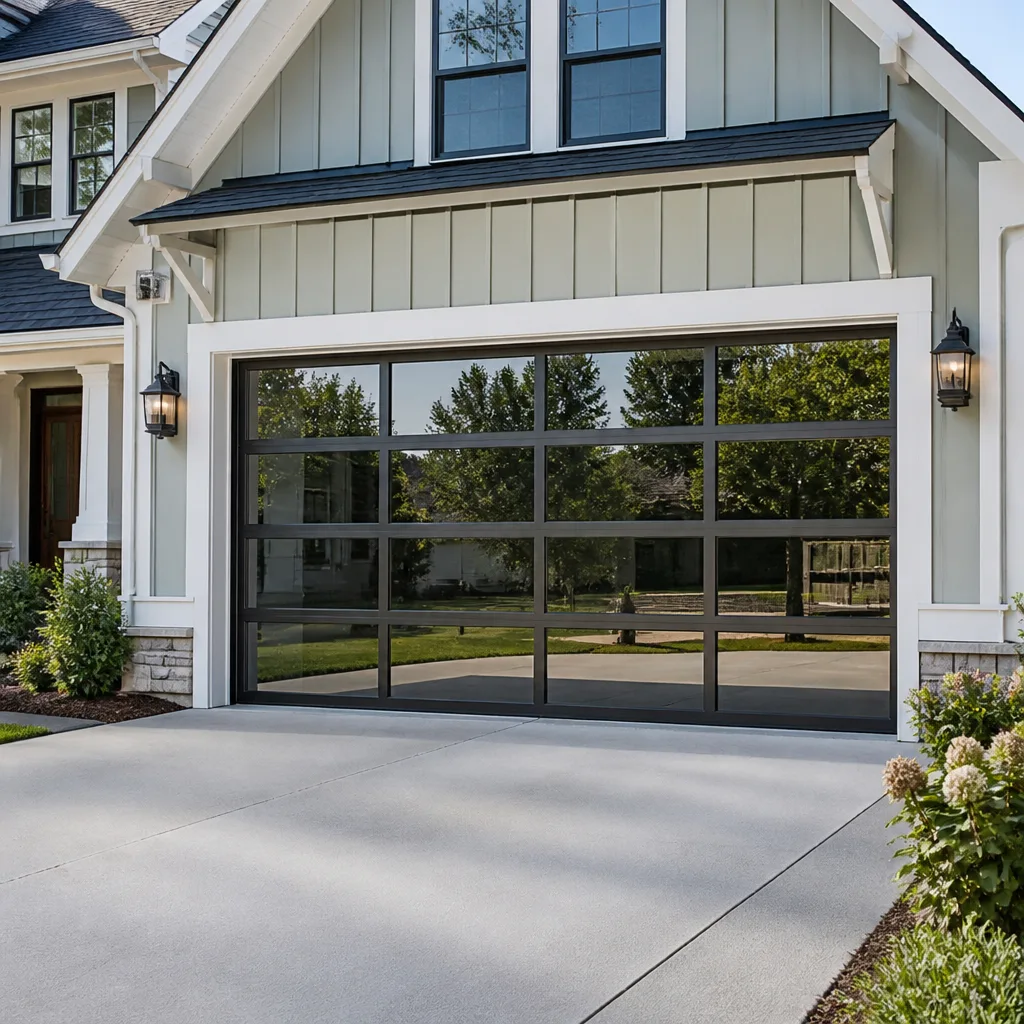 Full-view glass
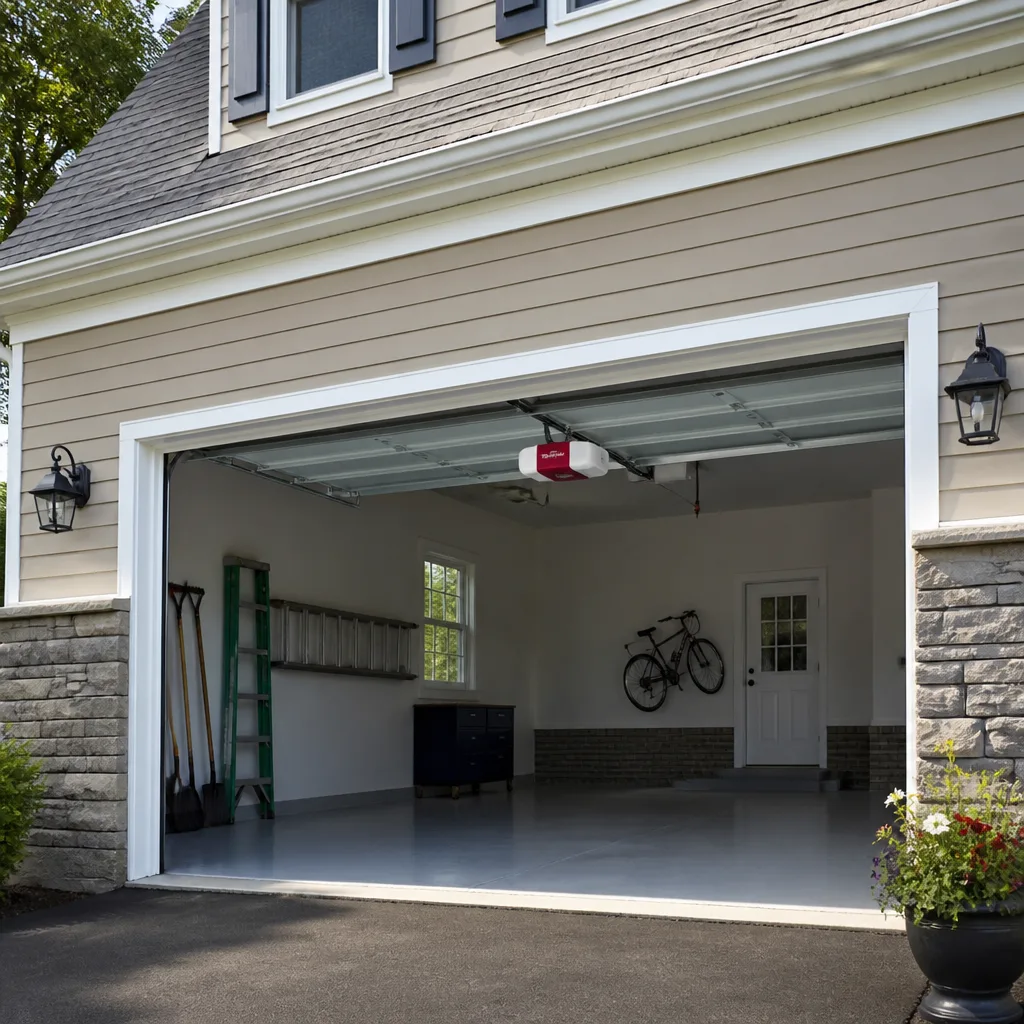 LiftMaster openers
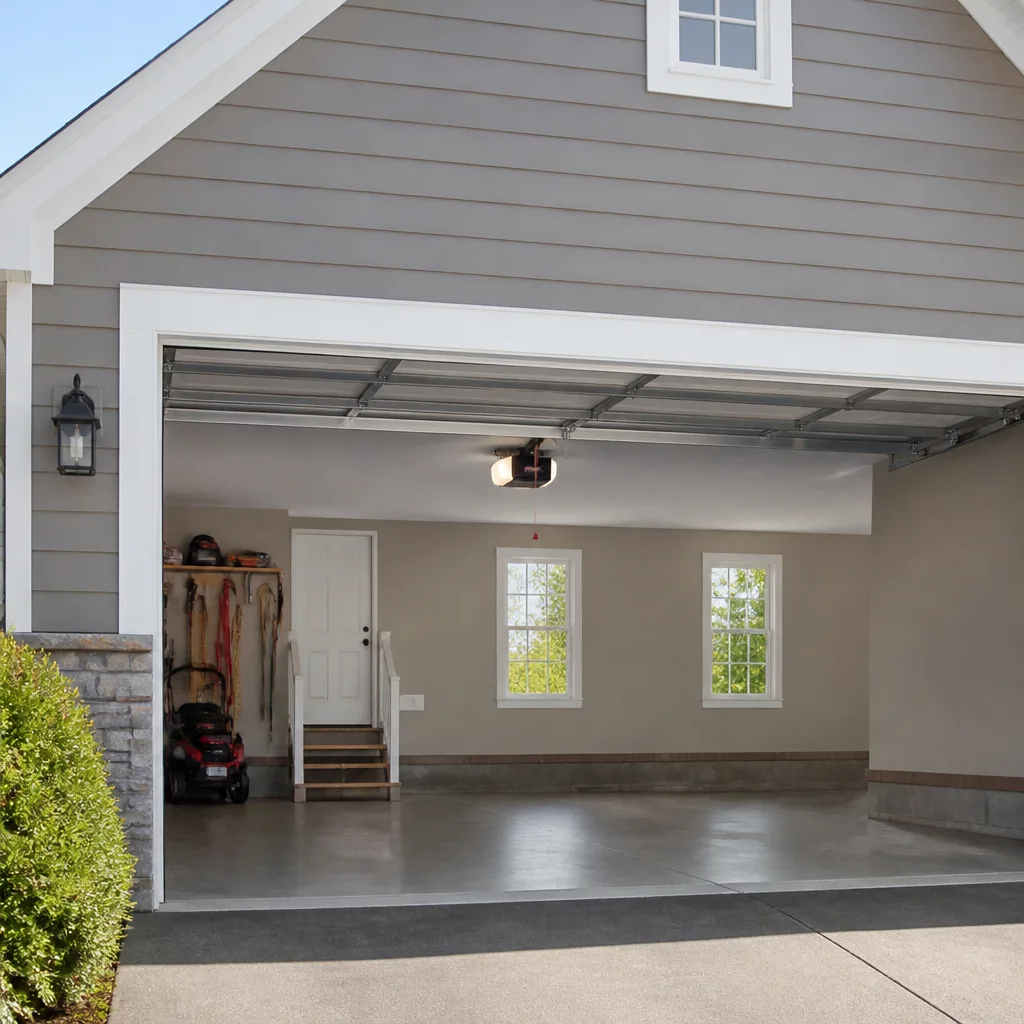 Chamberlain openers
Full 25-point door and opener safety check with every visit - springs, cables, rollers, tracks, and your LiftMaster or Chamberlain opener included
You get a price before we start. It does not change when the pro arrives.
Get your free estimateThe Complete Guide to Garage Doors in Pasadena
Most garage door guides are written for Phoenix or Denver. Pasadena, TX sits about 10 miles from the Gulf Coast, and the hardware that holds up for 20 years in a dry climate can corrode, warp, or drop below wind-load ratings here in under five. That fact changes almost every decision a homeowner makes, from steel gauge to opener type to how a track gets anchored to a slab floor. This guide maps those decisions to the actual physical environment of Pasadena: the humidity, the hurricane-season wind loads, the slab foundations, and the brand availability you’ll find at local distributors. You’ll learn what to check, what to spend, and when to call a trained technician instead of a generalist.
Quick Answer
A garage door in Pasadena needs to handle year-round humidity above 75%, hurricane-season wind loads that Harris County takes seriously, and slab-foundation anchoring that behaves differently from what most national guides describe. Choose a door with a real wind-load rating stamped on the spec sheet, a finish coating built for coastal humidity, and an opener from a brand a local technician can actually diagnose. Match the material and insulation to Pasadena’s hot-humid climate, not to marketing copy written for dry states.
Styles & brands we work with
- Raised-panel steel
- Carriage house
- Modern flush
- Full-view glass
- LiftMaster openers
- Chamberlain openers
Table of Contents
- How Pasadena’s Humidity Affects Steel Gauge and Finish Coatings
- Wind-Load Requirements and What “Hurricane-Rated” Actually Means
- Why Slab Foundations Change Track Anchoring and Sealing
- R-Value Marketing vs. Real Insulation Performance in a Hot-Humid Climate
- Brand and Model Availability at Local Distributors
- Choosing the Right Opener for a Pasadena Home
- Repair or Replace: How to Decide
- What Garage Door Work Typically Costs in Pasadena
How Pasadena’s Humidity Affects Steel Gauge and Finish Coatings
Pasadena averages a humidity index above 75% year-round. That number is the single most important fact when you’re choosing a steel garage door, and it’s the one most guides skip. Humidity that high means moisture sits against metal for most of the year, and any weakness in a finish coating gets exploited fast.
Here’s what that means in practice. A standard 24-gauge steel door is the entry-level build most national retailers push. In a dry climate it lasts. In Pasadena’s humidity, a 24-gauge panel without a proper galvanized or zinc-rich primer starts showing surface rust along the bottom edge and the panel seams within a few seasons. A 27-gauge or heavier door with a baked-on polyester finish and a hot-dipped galvanized base holds up far better. The gauge and the coating work together; one without the other is a weak link.
The bottom edge of the door is where humidity does the most damage first. It’s the closest to the slab, it collects condensate, and it’s where splash from rain off the driveway lands. When you inspect a door, look there first. Rust creeping up from the bottom edge means the coating has already failed regardless of what the brochure said.
- Gauge: Heavier is better in high humidity. A 27-gauge door with a real galvanized substrate outlasts a lighter door with a thin paint job.
- Finish: Look for a baked-on polyester or powder coat over a galvanized base. A single coat of paint over cold-rolled steel is not enough here.
- Seams: Every seam is a moisture trap. Doors with fewer welded or bonded seams hold up longer.
- Hardware: Hinges, rollers, and fasteners should be galvanized or stainless. Cheap zinc-plated hardware rusts in Pasadena’s air.
Clopay and Amarr both publish finish specifications on their product literature, and those specs matter more here than the brand name alone. When a local supplier quotes you a door, ask for the finish spec in writing. If it doesn’t mention galvanized substrate and a baked-on topcoat, keep asking questions. This is exactly the kind of brand-specific detail our technicians check before recommending a replacement, because the wrong door in this climate fails early no matter who installed it.
Wind-Load Requirements and What “Hurricane-Rated” Actually Means
A “hurricane-rated” garage door is one that’s been tested and labeled to a specific design pressure, and that number on the spec sheet is the only thing that matters. The word “hurricane” on a brochure means nothing by itself. What you need is the design pressure rating, expressed in pounds per square foot (psf), and it needs to meet or exceed what Harris County requires for your wind zone.
Harris County takes wind-load requirements seriously because hurricane-season wind loads here are real. The rating on a door reflects how much pressure it can withstand without the panels failing, the tracks bending, or the door blowing inward. A door rated to a lower pressure than your home’s requirement is not compliant, even if it looks sturdy. And here’s the part most homeowners miss: the rating applies to the door and its installation. A door rated correctly but anchored to a slab with undersized brackets won’t perform to its label.
Here’s how to read a spec sheet correctly:
- Find the design pressure number. It’s usually listed as “+/- X psf” or as a wind-load rating. That number is the door’s tested capacity.
- Confirm the rating covers your wind zone. Your local building department can tell you the required rating for your address. Ask them directly rather than guessing.
- Check the label on the door itself. A compliant door carries a permanent label stating its rating. No label, no proof.
- Verify the installation method. Reinforced hinges, heavier tracks, and correctly sized anchors are part of the rating. A door rated for high wind but installed with standard hardware is not a high-wind door.
- Ask about the opener. Some openers aren’t rated to work with high-wind doors. Confirm compatibility before you buy.
When we spec a door for a Pasadena home, we start with the required design pressure and work backward to the door and hardware package. That order matters. Buy the door first and try to make the rating fit, and you’ll pay for it in corrections or a failed inspection.
Why Slab Foundations Change Track Anchoring and Sealing
Most Pasadena homes sit on slab foundations, and that changes something national guides rarely mention: how the vertical tracks are anchored and how the bottom of the door is sealed against the floor. On a slab, there’s no wood subfloor and no crawl space to absorb movement. The door’s tracks, brackets, and weather seal all interface directly with concrete, and concrete behaves differently than wood framing.
The vertical tracks on a slab-mounted door anchor into the concrete or into the wall framing right at the slab line. The anchors need to be sized for concrete, and the brackets need to sit flush against a surface that doesn’t give. When a track is anchored short of the slab or with the wrong fastener, the door runs slightly out of plumb, and that misalignment shows up as a door that drags, rattles, or wears its rollers unevenly. The fix usually starts with re-anchoring the track correctly, not with replacing the door.
The bottom seal is the other slab-specific concern. On a slab, the concrete and the door bottom are close together, and in Pasadena’s humidity, that gap is where moisture, insects, and splash get in. A properly installed bottom seal sits firmly against the slab and stays there. A seal that’s too thin, too short, or installed without accounting for slab irregularities lets water under the door and into the garage, which is exactly what you don’t want in a humid climate.
- Anchor type: Concrete-rated anchors, not wood screws, for anything going into the slab.
- Track plumb: Tracks should be checked for plumb and level during installation, because a slab gives you no give to correct drift later.
- Bottom seal: A slab requires a seal sized to the actual gap, and the gap varies from home to home.
- Water path: Check that the slab slopes away from the door so rain doesn’t pool at the threshold.
If your door’s tracks look tilted or the bottom seal leaves a gap, that’s a job for a technician who works with slab construction regularly. Re-anchoring a track into concrete is not a weekend project, and doing it wrong can leave the door running worse than before. Our garage door repair work on Pasadena homes starts with a track and seal inspection for exactly this reason.
R-Value Marketing vs. Real Insulation Performance in a Hot-Humid Climate
R-value is a measure of how well a material resists heat flow, and in a hot-humid climate like Pasadena’s, it matters less than the insulation’s ability to block moisture and hold its shape over time. That’s the part the marketing skips. A high R-value printed on a brochure is a lab number, measured on a dry panel under controlled conditions. In a garage that sees year-round humidity above 75%, the same panel can perform very differently once moisture gets into it.
Insulation in a garage door comes in a few common forms: foam panels bonded to the back of the door, injected foam between steel skins, or a layer of foam board. The foam itself doesn’t absorb much water, but the facing and the seams around it can. A door with a bonded foam back that’s exposed to humid garage air can accumulate condensation on the facing, and over time the bond can weaken. A door with injected foam between steel skins is more protected because the foam is sealed inside, which is the better choice in this climate.
The functional number to look at is not the peak R-value but the installed performance, which depends on the fit of the door in the opening. A door with a great R-value that doesn’t seal well against the slab, the header, and the jambs lets hot, humid air in around the edges, and that edge leakage defeats the insulation entirely. Weatherstripping, bottom seals, and side seals do as much work as the panel insulation in a Pasadena garage.
- Insulation type: Injected foam between steel skins is the better match for humidity than exposed foam panels.
- Edge sealing: Perimeter seals and a good bottom seal reduce air and moisture infiltration more than a higher R-value alone.
- Garage use: If your garage is conditioned or you use it as living space, insulation pays off. For an unconditioned garage, it’s a comfort and durability choice, not a big energy saver.
- Finish: The interior finish of an insulated door should also resist moisture. Bare foam or unfinished panels aren’t ideal here.
When we quote an insulated door in Pasadena, we talk about the insulation construction and the perimeter sealing together, because that’s how the panel actually performs in a humid, slab-based garage. Our Garage Door Repair Pasadena Pros team handles this kind of spec review before any door is ordered.
Brand and Model Availability at Local Distributors
A door or opener quoted online by an out-of-state supplier may not be the same model a local distributor stocks, and that gap causes real problems. The model number on the online quote might be a regional variant, a discontinued line, or a build that isn’t serviced by anyone locally. When it fails, you’re stuck waiting on a part or a technician who knows the model. Our technicians have up to 9 years of experience working with the major residential brands, and that experience is where the local-knowledge advantage shows up.
We work with eight major brands: LiftMaster, Chamberlain, Genie, Clopay, Amarr, Wayne Dalton, Craftsman, and Raynor. Those eight cover most residential doors and openers you’ll find in Pasadena. Each one has its own models, parts availability, and service quirks:
- Clopay and Amarr are strong choices for steel doors, and their product literature lists the finish and wind-load specs you need to check.
- LiftMaster and Chamberlain dominate residential openers and have broad local parts availability.
- Genie openers are common in older Pasadena homes, and their models vary more than people expect.
- Wayne Dalton, Craftsman, and Raynor round out the range, and each has models a trained technician can diagnose without guesswork.
Before you buy, ask the supplier three questions: Is this the model number a local technician will recognize and service? Are replacement parts available locally? Does the spec sheet list the finish and the wind-load rating in writing? If any answer is unclear, check with a local specialist first. In our experience, brand-specific diagnostics are what get a door working right the first time and cut down on return visits, and that requires matching the model you buy to the parts and knowledge available in Pasadena.
Choosing the Right Opener for a Pasadena Home
The opener is the part of the system you interact with most, and in Pasadena’s climate, matching the opener to the door and the home matters. A few factors drive the choice: door weight, whether the door is high-wind rated, whether you want smart features, and how the opener is mounted to the slab-based ceiling structure.
LiftMaster and Chamberlain openers are the most common choice for residential doors and they handle the weight and duty cycle of a standard insulated door well. Genie openers are common in older homes, and if your door still runs on an older Genie, replacing it with the same brand is often the simpler path because the mounting and safety sensors are already set up. Craftsman openers are also common and serviceable. What matters most is that the opener is rated for your door’s weight and that the safety sensors are set correctly.
For high-wind-rated doors, check that the opener is compatible with the door’s rating before you buy. Some openers aren’t rated for high-wind doors, and putting a non-rated opener on a rated door is a mismatch that can cause problems. Smart features are a nice addition, but they’re secondary; the opener has to handle the door’s load and the climate first.
- Match the opener to the door weight. An insulated, high-gauge door is heavier than a basic steel door, and the opener’s lift rating has to cover it.
- Confirm high-wind compatibility. If the door is rated for wind loads, the opener has to be rated to work with it.
- Check the safety sensors. The sensors at the bottom of the door need to be mounted, aligned, and tested after installation.
- Test the balance first. A properly balanced door takes little effort to move by hand. If the door fights the opener, the problem is the door, not the opener.
- Ask about parts. A brand with local parts availability is easier to keep running in Pasadena.
Our garage door opener repair work covers the full range of brands, and the most common issue we see is an opener fighting a door that’s out of balance. That’s a door problem wearing an opener costume.
Repair or Replace: How to Decide
A door is usually worth repairing when the structure is sound and the problem is in the moving parts. A door is usually worth replacing when the panels, finish, or wind rating are compromised. The decision comes down to four questions, and answering them in order saves you money.
- Are the springs the problem? Broken springs are the most common failure, and they’re a repair, not a replacement. Springs are high-tension components that need specialized tools and training, not a workaround, so this is a job for a trained technician.
- Is the door balanced? A door that’s hard to lift by hand or slams down is out of balance, and that’s usually a spring or track issue. Balance problems are repairable.
- Is the finish or bottom edge failing? Rust creeping up from the bottom edge, warped panels, or a finish that’s peeling means the door’s shell is compromised. In Pasadena’s humidity, that’s the most common reason a door needs replacing rather than fixing.
- Does the door meet the wind-load rating? An older door with no label or a rating below your requirement isn’t compliant, and no repair changes that. That’s a replacement decision.
For the first two questions, the answer is almost always repair. For the last two, replacement is usually the smarter spend. The mistake is replacing a door for a spring problem, or repairing a door that’s already past its finish life. A free estimate sorts it out in a single visit.
What Garage Door Work Typically Costs in Pasadena
Pricing depends on the job, and every quote is set by a written estimate before work starts. What we can share are typical ranges so you can budget. These are estimates, not a fixed price, and the written estimate you receive is what sets your final cost.
- Garage door spring repair: Roughly $180-$340 for one spring. A matched pair is usually replaced together, so a pair costs about twice that.
- Garage door repair (general): Track, roller, hinge, and cable work typically falls in a few hundred dollars depending on parts.
- Opener repair: Usually in the low hundreds for a repair, higher if the opener is replaced.
- New door installation: A full replacement is a measured, ordered, and scheduled job. The written estimate covers the door, hardware, and installation.
The price on the estimate is the price you pay. It’s agreed before any work starts, and it doesn’t change because the technician found something when they arrived. That’s the answer to the question everyone asks, which is whether the invoice will be bigger than the quote.
For an exact quote on spring work or a full replacement, our garage door spring repair page and the main garage door repair service page both spell out the process. Call (855) 943-1327 for a free estimate.
Common Mistakes to Avoid
- Buying a 24-gauge door for a Pasadena home. Standard gauge steel without a proper galvanized finish starts rusting within a few seasons in year-round humidity above 75%. Ask for the finish spec in writing, not just the gauge.
- Trusting the word “hurricane-rated” without a number. The label and the design pressure rating are what matter. A door with no rating label isn’t proven, regardless of how the brochure describes it.
- Ignoring the slab when installing tracks. Anchoring a vertical track into a slab with the wrong fastener leaves the door out of plumb, and Pasadena’s slab construction gives you no give to correct it later.
- Mistaking R-value for real performance. A high R-value on a door that doesn’t seal at the perimeter loses most of its benefit in a humid garage. Insulation construction and sealing work together.
- Replacing a door when the springs are the problem. Broken springs, balance issues, and track problems are repairs. Replacing a sound door for a spring failure is money wasted.
- Buying an out-of-state model a local technician can’t service. Online quotes often list models that aren’t stocked locally or serviced by anyone in Pasadena. Confirm the model before you buy.
- Putting a non-rated opener on a rated door. A high-wind door needs a compatible opener. Mismatching them causes problems and can undercut the door’s rating.
See the difference
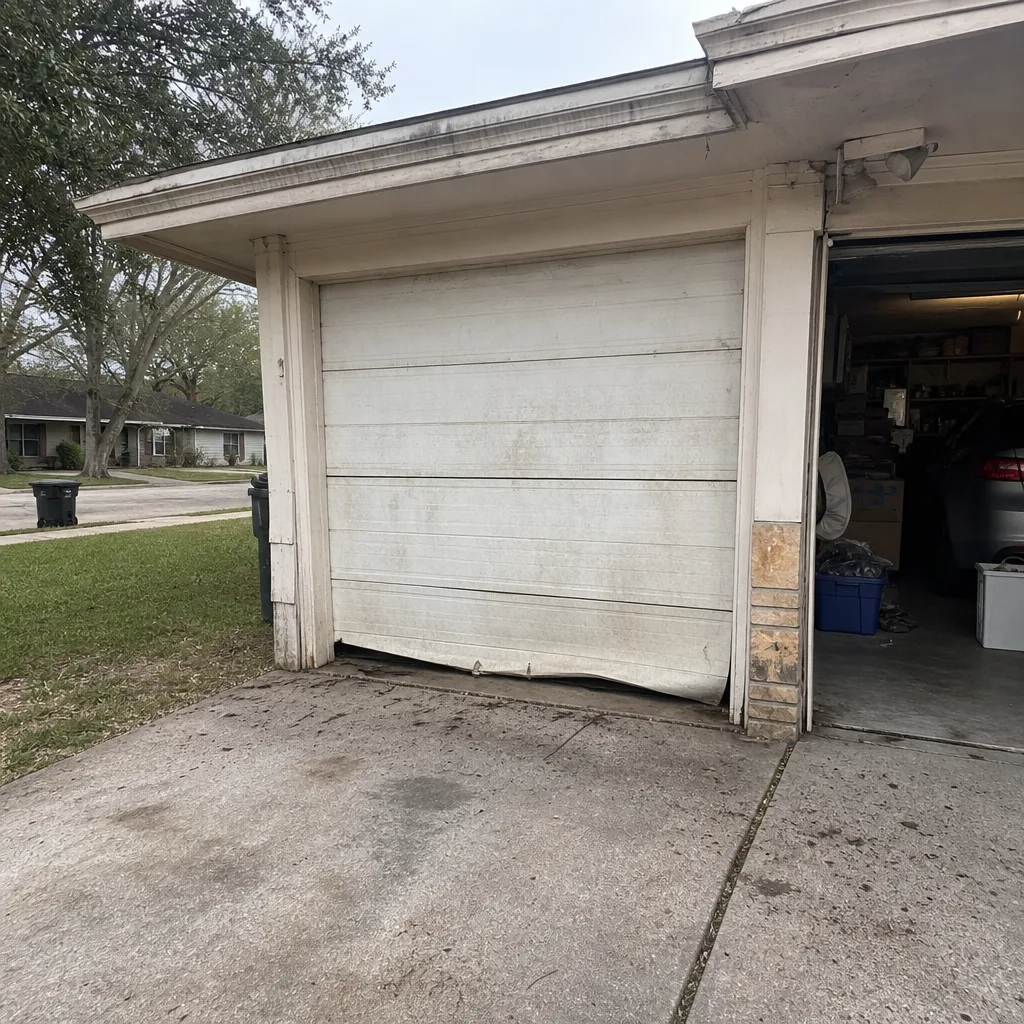 Before
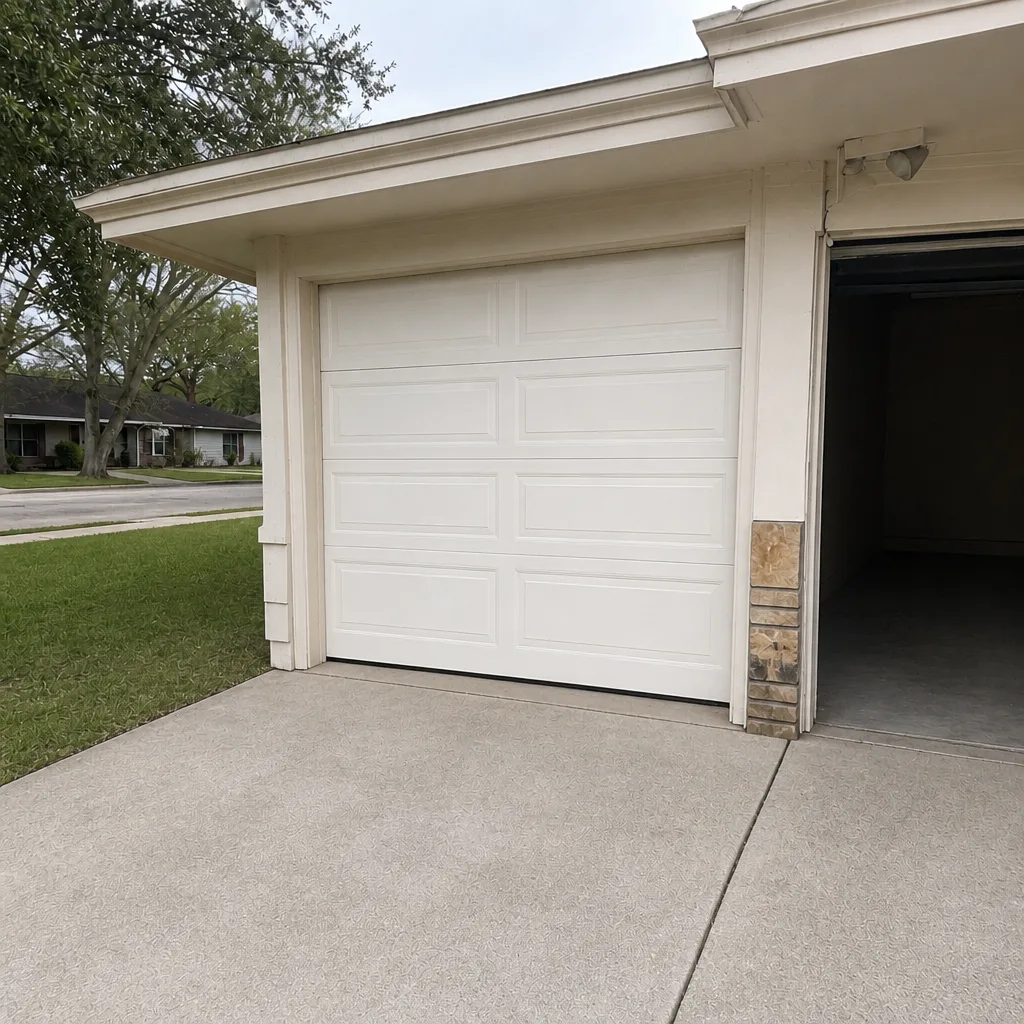 After
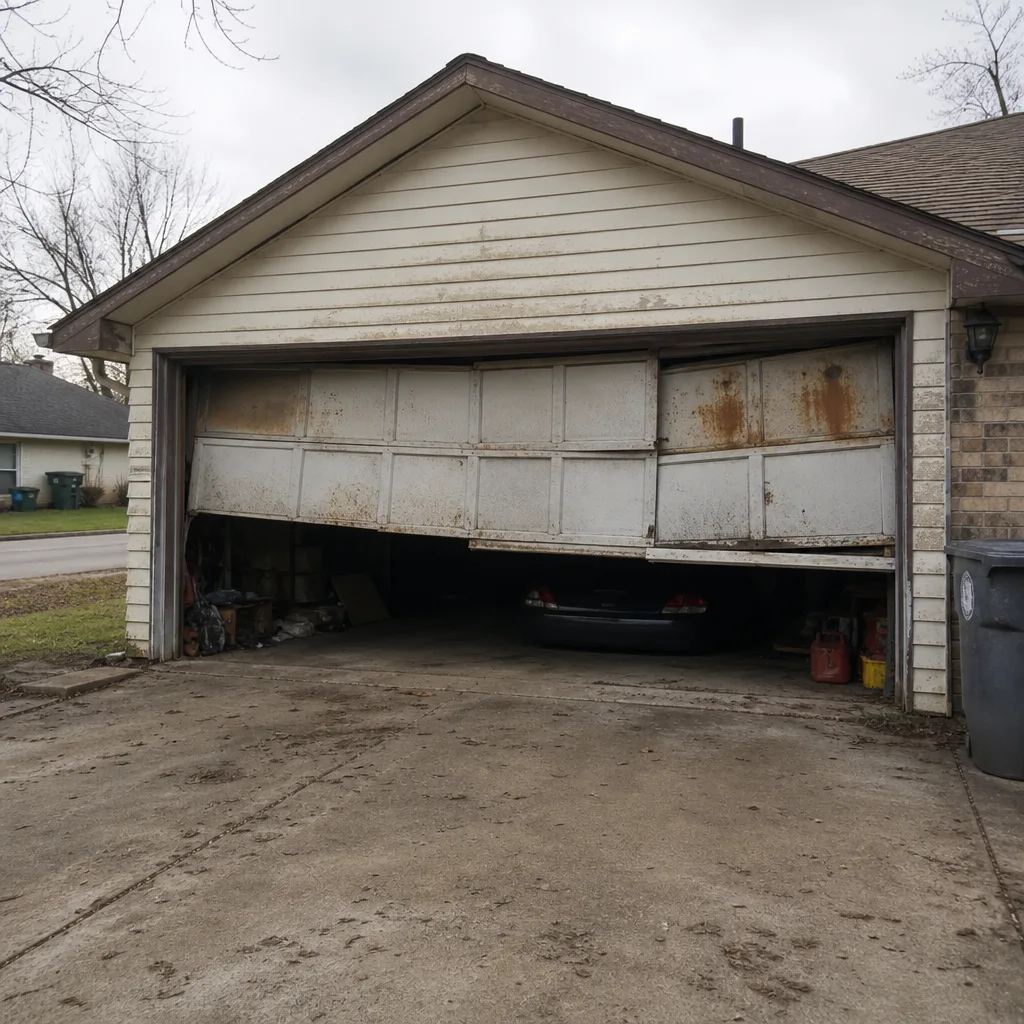 Before
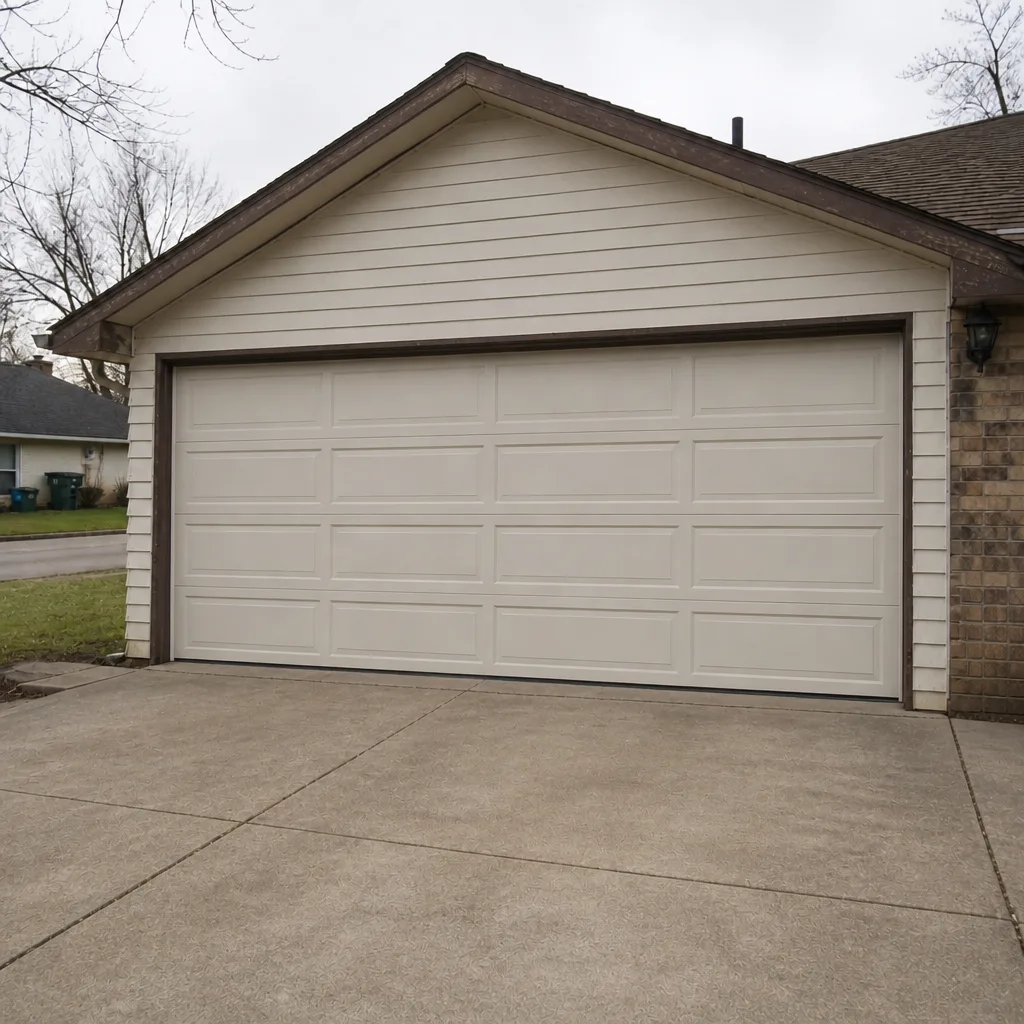 After
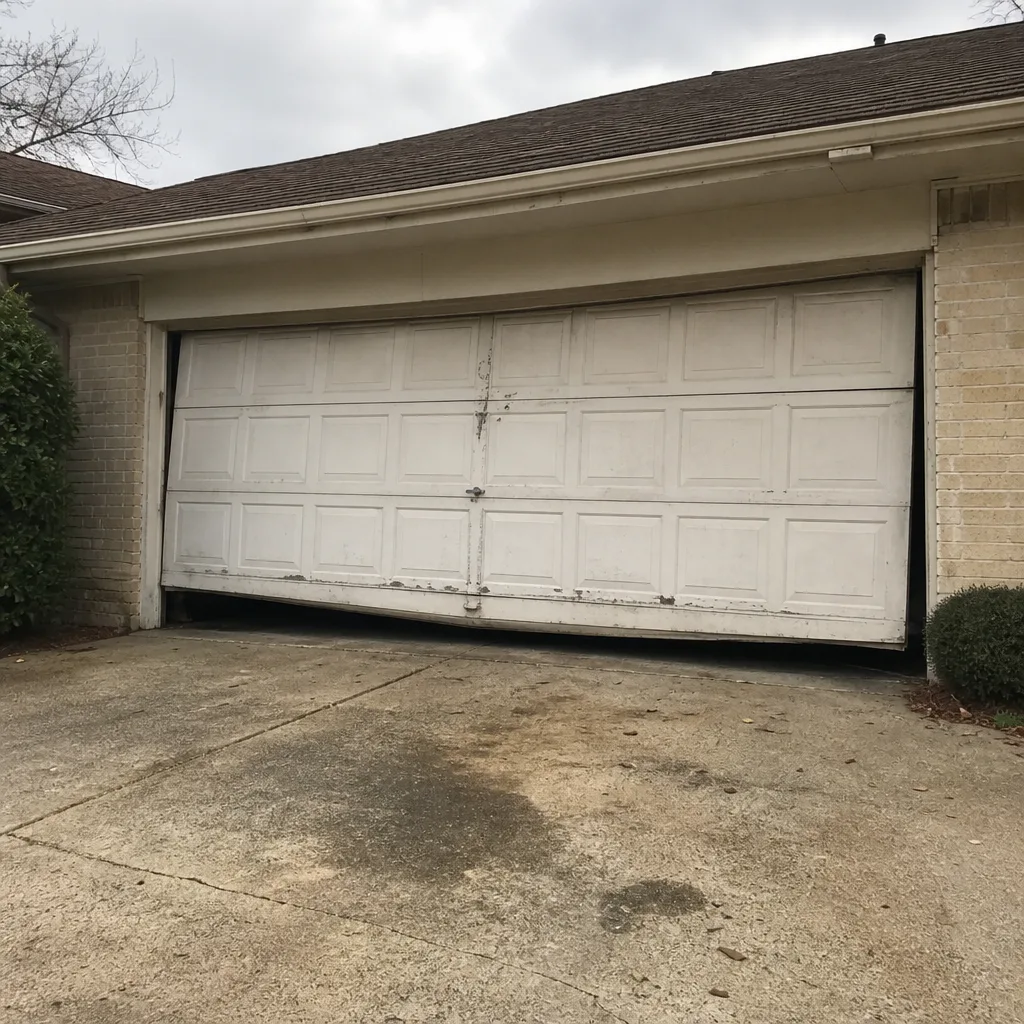 Before
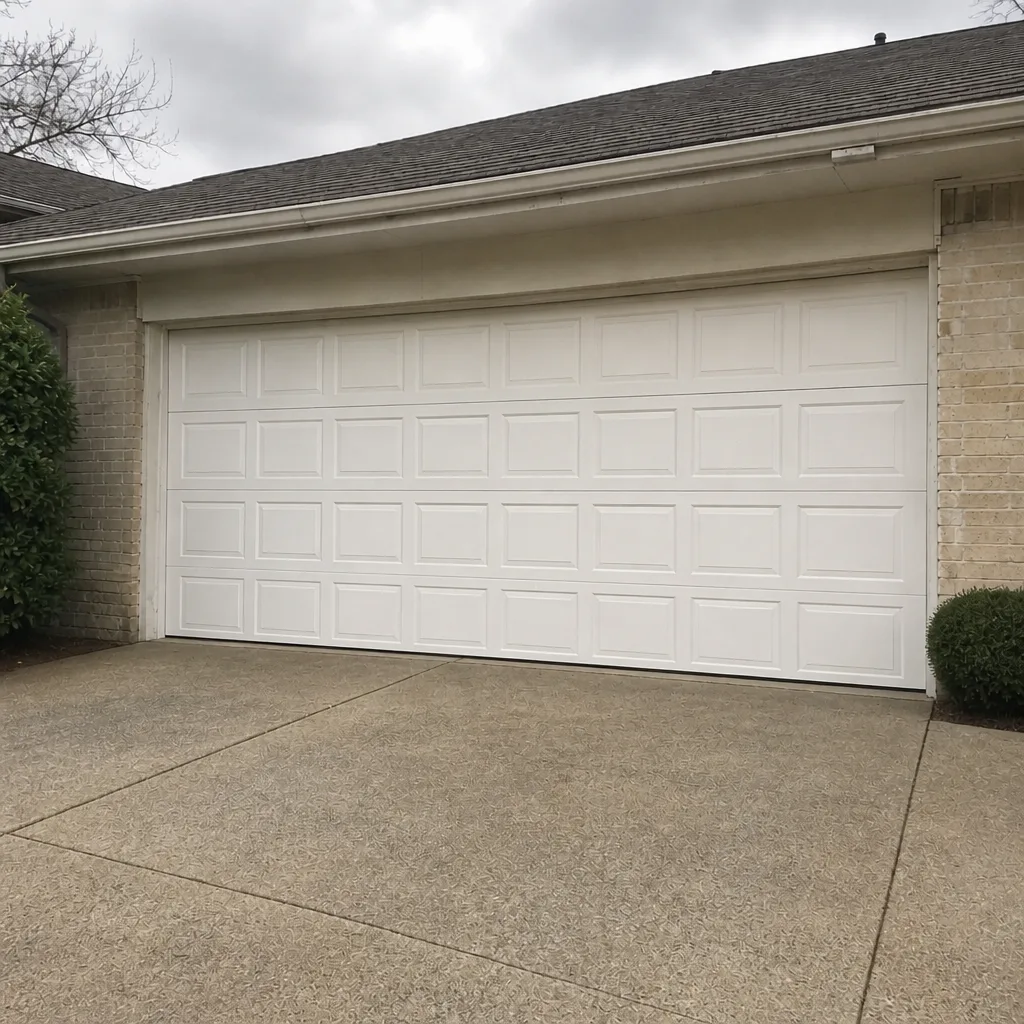 After
When to Call a Professional
Call a professional when the door won’t open or close, when it makes grinding, popping, or snapping sounds, or when you see a visible kink in a spring. Call immediately if a door is stuck open, since an open garage in Pasadena is a security and safety concern that can’t wait. Broken torsion cables, doors that come off their tracks, and any spring issue should go to a trained technician. Springs are high-tension components that can cause serious injury, and a generalist’s guess or a DIY workaround is the wrong approach. Also call before you buy a new door, so the finish, wind-load rating, and insulation spec match your Pasadena home. Garage Door Repair Pasadena Pros offers free estimates in Pasadena – call (855) 943-1327. We answer 24/7. Fast dispatch from 7am to 7pm, Sunday through Friday.
Frequently Asked Questions
Spring repair in Pasadena typically runs about $180-$340 for one spring, and a matched pair usually costs about twice that because pairs are replaced together. Call (855) 943-1327 for an exact quote – estimates are free.
For urgent failures, our emergency service is available and same-day repairs are possible for many jobs. Call (855) 943-1327. We answer 24/7. Fast dispatch from 7am to 7pm, Sunday through Friday, and a call outside dispatch hours is booked into the next opening.
No. The price is quoted and agreed before any work starts, and the written estimate sets the final price. Call (855) 943-1327 for a free estimate.
The local professional who performs the work is licensed and insured as Texas requires, and our technicians have up to 9 years of experience with the major brands. Call (855) 943-1327 to talk through your job.
Pasadena’s year-round humidity above 75% accelerates rust on lighter steel without a proper finish, so a heavier gauge with a galvanized base and baked-on coating holds up longer here than a standard 24-gauge door. Call (855) 943-1327 for a free spec review.
It means the door has been tested and labeled to a specific design pressure rating in pounds per square foot, and that number on the spec sheet and label is the only proof that matters. Your local building department can confirm the required rating for your address. Call (855) 943-1327 with questions about your wind-load spec.
The Bottom Line
Pasadena’s environment sets the terms for every garage door decision. The humidity above 75% decides your steel gauge and finish. Harris County’s wind-load requirements decide your door’s rating and hardware. Slab foundations decide how the tracks are anchored and sealed. Brand availability at local distributors decides what you can actually get serviced when something fails. Get those four things right and a door lasts far longer here than a generic national guide would predict. Get them wrong and you’re paying for the same door again in a few years. A free written estimate, agreed before any work starts, is the fastest way to sort out what your door needs.
Call (855) 943-1327 for a free estimate. We answer 24/7. Fast dispatch from 7am to 7pm, Sunday through Friday.
Written by the team at Garage Door Repair Pasadena Pros.